
Revolutionising Early Diagnostics: How Nanophage is Illuminating the Future of Healthcare
Deep tech commercialisation is notoriously difficult, but the stakes are never higher than when the technology in question has the potential to fundamentally change how we detect and treat life-threatening conditions.
Nanophage, a pioneering health tech company, is proving that with the right platform technology and the right commercial partners, we can drastically improve diagnostic sensitivity and ultimately save patient lives.
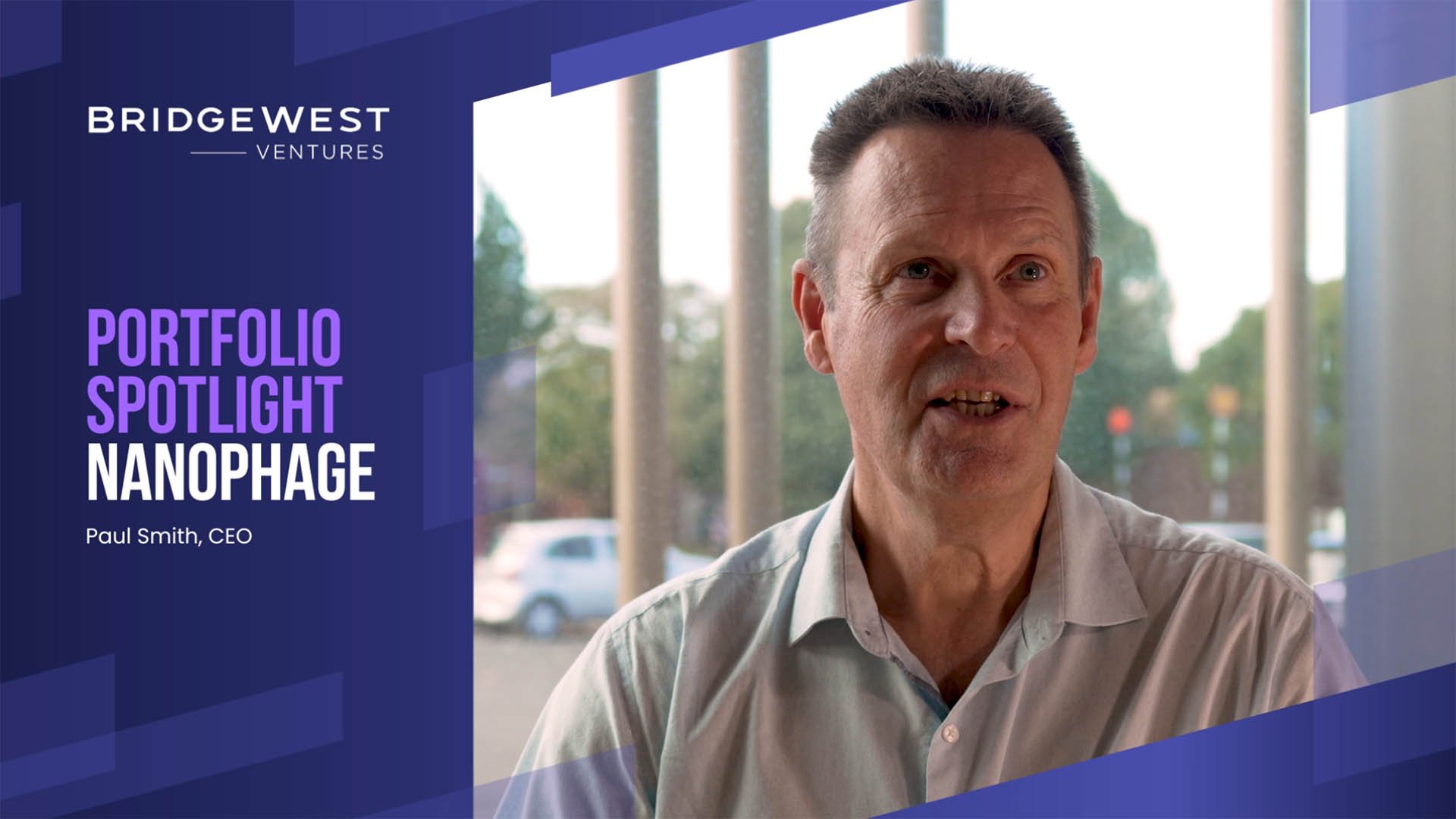
Nanophage is developing an extraordinary platform technology designed to solve one of the most critical challenges in medicine: detecting diseases as early as possible. Nanophage CEO Paul Smith explains:
"If you can diagnose a disease earlier or discover a drug earlier, you can get much better outcomes with patients. The sooner you get onto treating the problems, the better. And what we do is enable the earlier diagnosis of a number of diseases."
The Diagnostic Hurdle
The fundamental challenge with identifying diseases like cancer, Alzheimer's, or infectious diseases is twofold. First, you need a way for a diagnostic test to physically attach to the specific disease marker. Second, you need a signal bright enough to actually see that attachment.
Historically, innovations have improved one side or the other, making molecules slightly stickier or slightly brighter. Nanophage has engineered a way to do both simultaneously.
"What we do in our technology is both of those things at the same time, in orders of magnitude above anything that's out there that we're aware of."
The real world application of this technology is staggering. Imagine a patient in an ambulance. Instead of waiting for complex laboratory blood tests at the hospital to figure out what is wrong, paramedics could perform highly sensitive tests right there in the vehicle. By the time the patient arrives at the hospital, the medical team is already prepared to begin targeted treatment.
The Reality of Scaling Deep Tech
Having a functional platform technology that works across multiple diseases is an incredible scientific milestone, but transitioning from a university lab bench to commercial viability is a monumental leap.
This is exactly why Bridgewest Ventures got involved at the very beginning. Recognising the game changing potential of biological nanorods, Bridgewest partnered early to help spin the technology out of Massey University research, providing the foundational setup and seed investment needed to launch Nanophage.
"Bridgewest Ventures don't just invest in a company and hope. They put a real wrapper of support around them to make sure they're successful. They're not just suppliers of cash, they're suppliers of networks globally."
With that wrap-around support, Nanophage is now successfully navigating the complex reality of commercial manufacturing.
"We've proven that we can scale the product, and we're working through that at the moment. The next challenge is can we get batch to batch consistency, and everything we've seen so far is going really well on that."
This deep partnership model grants the Nanophage team direct access to an international network of scientific experts to help unlock those complex research problems, alongside a deep bench of global investors to fuel their ongoing commercial traction.
Building for a $70 Billion Global Market
With their manufacturing momentum building, Nanophage is firmly focused on the future. They are actively scaling up their production capabilities to deliver on commercial projects with customers all over the world.
Operating in a $70 billion global diagnostic market and a $10 billion research market, the opportunities are effectively endless. By combining unparalleled diagnostic sensitivity with global venture backing, Nanophage is not just building a successful deep tech company. They are building a future where patients can get the answers they need, exactly when they need them.